

Tire Sizes: For the Confused (Which is Everyone)
Tire sizes have always eluded me. People talk about their trucks or project cars and just rattle off numbers. Like "You running 20s?" or "Nice, some 335s". Like what are they saying?
So here's an article to break down tire sizes, and a handy tool to convert from metric to imperial. Personally, I find the imperial units a lot easier to understand. Which, honestly, is a first.
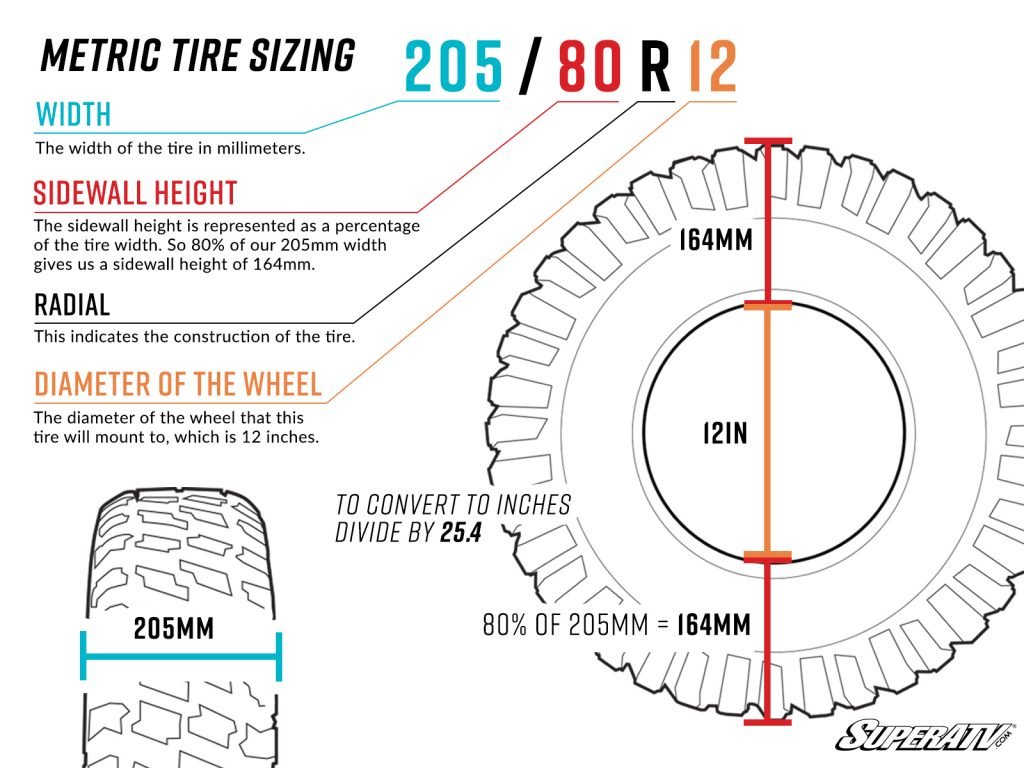
Source: SuperATV
Metric Units
Metric tire sizes are measured with three things: tread width, sidewall aspect ratio, and wheel diameter. The tread width, measured in millimeters, is the width of the tire contact patch with the road. The aspect ratio is the ratio of the width to the height of the sidewall. So an aspect ratio of 65 means the sidewall is 65% of the tread width. Then, the diameter is the diameter of the wheel. This is measured in inches. Before you ask it, yes, the metric tire sizes has imperial units.
This method of explaining tire sizes is used in just about every road car. But it makes even the simplest of comparisons very difficult. For example: take Tire A, 225/65R16, a very standard tire. Then, Tire B, 225/75R16. They're the same size right, since the radius is the same? No. Tire B is taller, as it has a higher ratio of sidewall than Tire A, so there is more tire around the 16 inch radius.
And along those same lines, R18s are bigger tires than R16s, right? Well not if the aspect ratio is different. So to find the actual sire of the tire, you had to do quite a bit of calculations.
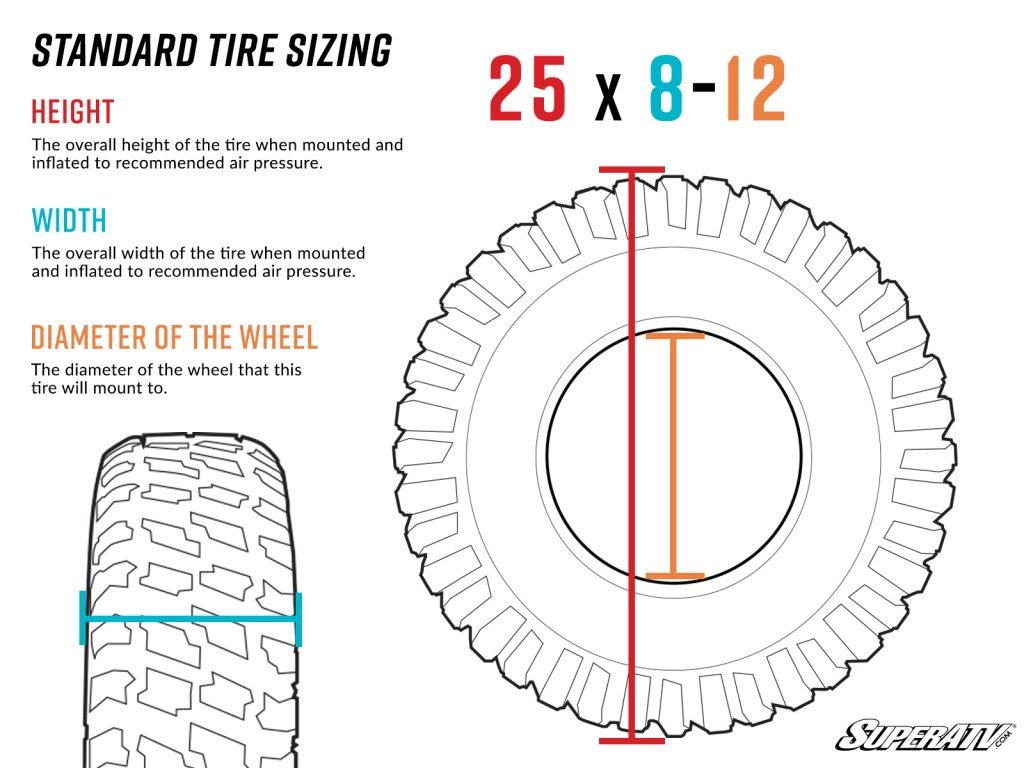
Source: SuperATV
Imperial Units
Opposite of the metric units is imperial. Imperial uses all imperial units (how strange!). First, there is the tire height. This is simply the distance from the ground to the top of the wheel at full inflation. Then, there is the tire width. And third, is the diameter of the rim. Pretty simple, right?
This makes comparisons much easier. First, you already know the height of the tire. So if you compare a 20x8-12 and a 20x8-13, you know the second tire has a bigger rim (13 inches). Or, if you need a taller wheel by an inch. You just add an inch!
Tire Size Conversion
Note: This is a unit calculator, it is NOT recommendations on what tire sizes to get.
Enter the tire size you want to convert (metric: ___/___R___, imperial: ___x___-___)
