

Reliant Robin: Who Needs Four Wheels?
By William Ratcliff
The 3-wheeled Reliant Robin hit the market in 1973. This wasn't the first car from the British manufacturer Reliant Motor Company, but it is the most remembered. Other models like the Reliant Regal were also 3-wheeled, but they had 4-wheeled cars too. It was made of fiberglass, like the Chevrolet Corvette. Though it's performance wasn't like a Corvette, it stands up well against other 3-wheeled automobiles. Who knew there were so many?
Source: Wikipedia
The First Generation
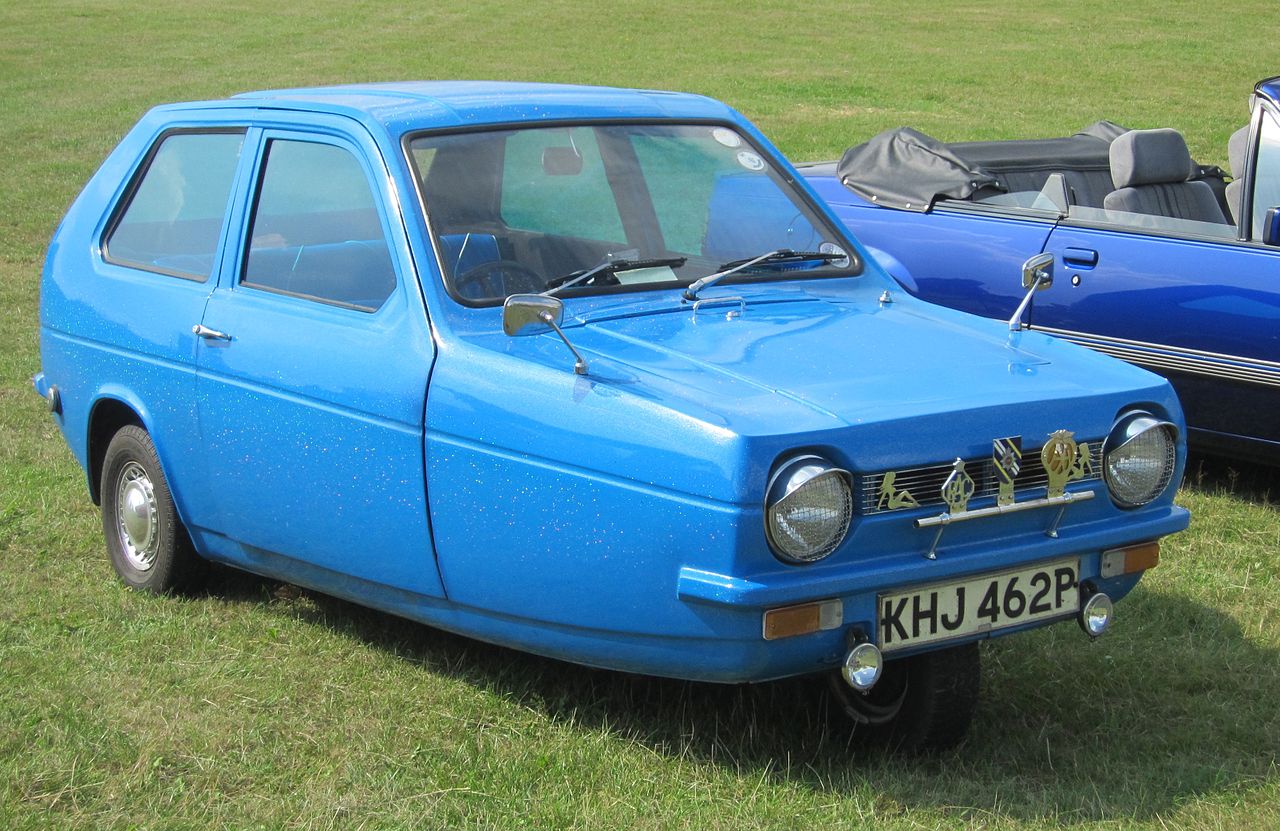
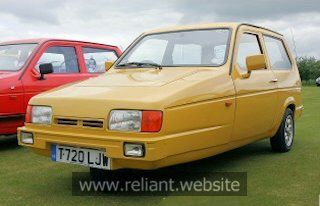
The Mk I Reliant Robin started with a 750cc (0.75L) inline 4 cylinder, making a whopping 32 horsepower. In 1975 it gained a tenth of a liter (850cc) to make 40 brake horsepower. It was designed by the consulting company Ogle Design, who had worked on other Reliant cars. That design prowess mixed with the ability to reach 70/80 mph made the car a very economic option.
Along with the engine change in 1975, the front grill changed from many thin metal grids to just a four-section grill. It came in four trims: Standard, Super, Estate, and Van. The new engine performed the 0-60 in just 16.1 seconds. For reference, that is just over 6 times the time it takes a 2023 Chevrolet Corvette Z06 to make 0-60. If you walked an average speed of 2.5 mph, you would walk 59 feet. (2.5mph*(16.1seconds/3600seconds/hour)*5280ft). Fast walker at 4mph, 94.4!
This car was also innovative because it allowed consumers to enjoy the usefulness of a car with the taxes of a motorcycle! The car only weighed 992 pounds, and made incredibly good fuel economy. Additionally, it housed 8.5 cubic ft of storage (40 cubic ft in the MK II van).
Source: Reliant.website
The Second Generation
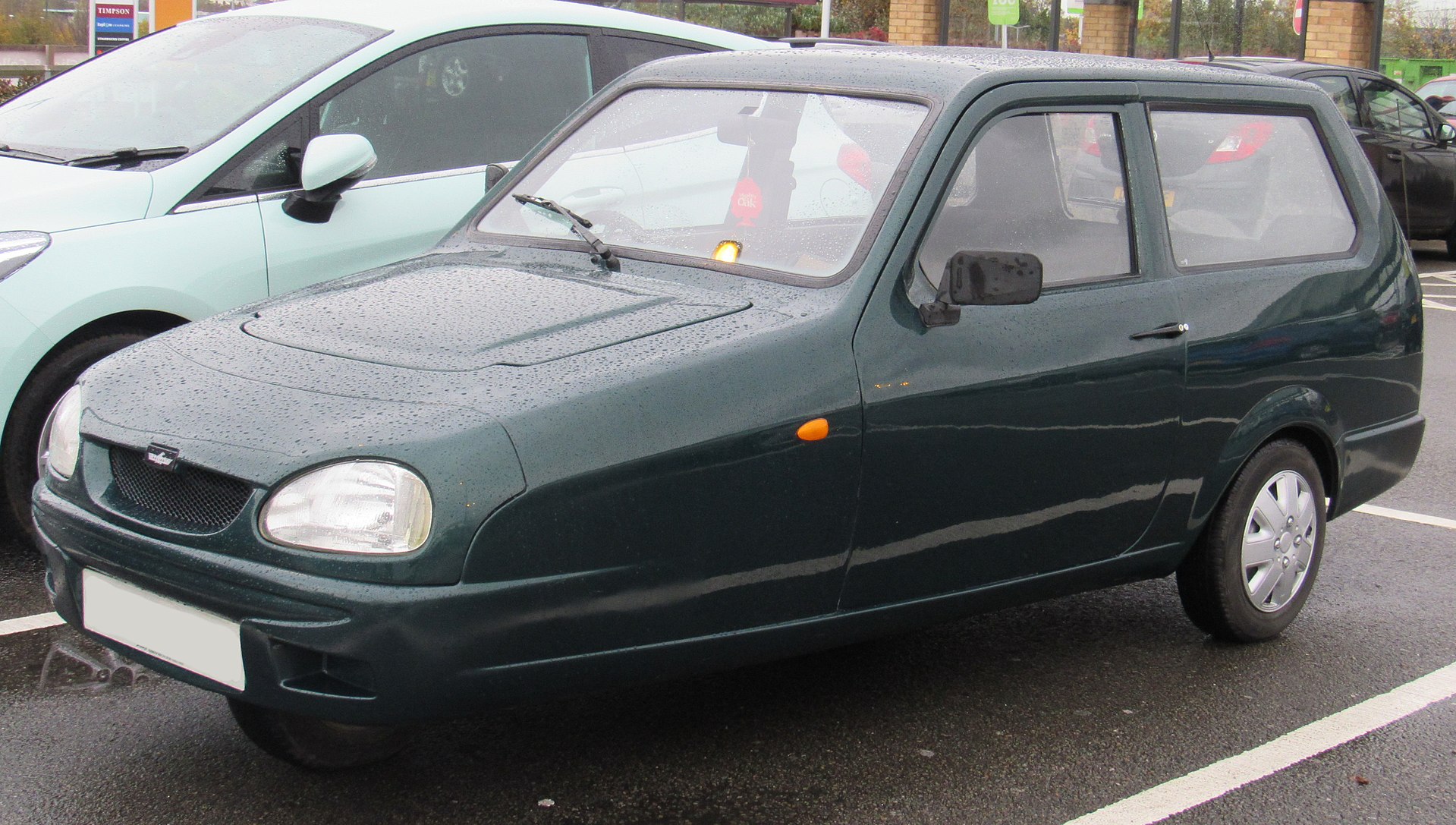
After the MK I ended in 1982, the Rialto took its place. However, in 1989 Reliant brought the nameplate back. Newer styling included square headlights, a single open grill, new wheels, and a full bumper. The Rialto stayed a cheaper version of the Robin, as the Robin expanded into the van and estate models again. Other trims became available later, such as the LX, SLX, BRG, and Royale. The top two trims, BRG and Royale cost a wallet-opening 9,000 pounds in 1999 (estimated around 16,083 pounds today, or $20,600). This would be a few thousand shy of a brand new Honda Civic, or a thousand off a new Toyota Corolla.
Some other improvements to the car was improved brakes and a new engine allowing unleaded fuels. Additionally, new colors were available, including metallic silver, British racing green, royal blue, and Nightfire red. It continued the same transmission as the MK I, a 4-speed manual.
Source: Wikipedia
The Third Generation
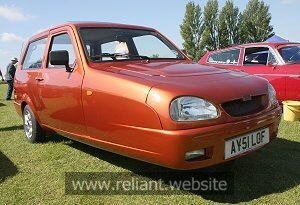
In 1999, the Reliant Robin got a new look. Well, newer. The lines curved out a bit, especially for the ever-changing grill, which rounded out in the bottom with a mesh design. The headlights also changed again, now very 2000s and blob-like. This redesign didn't last long, however, as 65 limited edition Robins ended the line. These special editions were fashioned with gold paint, leather seats, and latest technology. It priced out at 10,000 pounds in 2001 ($22,459 now).
Sadly, the Robin's story ended rather painfully after that. The Robin was picked up by B&N Plastics under a restrictive 250 car a year manufacturing limit. Due to production and financial problems, it only produced about 40. They were lighter, had more tech, and were nicer inside. The BN-1 and BN-2 models were both based on the Third Generation body style.
Source: Reliant.website
Legacy
Oddly enough, B&N Plastics intended on creating an electric Robin. And quite frankly, this would've improved the Robin quite a lot. A lower center of gravity would have improved stability and decreased its biggest flaw: falling over. Additionally, it would stay in line with the car's intended purpose of an economical commuter. The only similar cars to the Robin in production now would be the Smart Car, or Kei trucks. However, these lack the charm of the British 3-wheel design. And who knows, maybe someone will take up this design in the future, and fulfill its electric dream? Until then, let's appreciate this era of British automotive history.
[1] Inflation Calculator from the Bank of England
[2] Wikipedia
